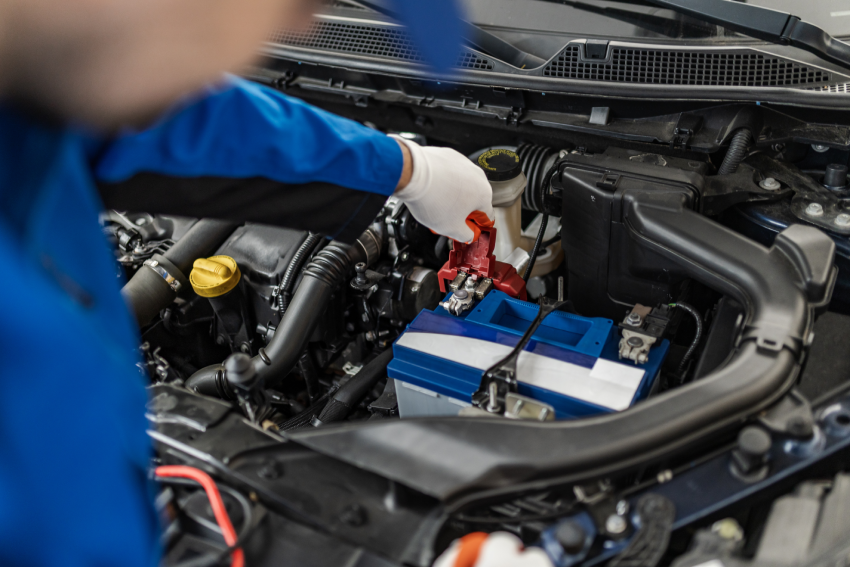
Most people brace their battery for winter and forget about it the rest of the year. Heat is actually harder on a battery than cold, and Colorado summers put real strain on the chemistry inside.
Why Heat Is Worse Than Cold for Batteries
Extreme cold slows down the chemical reaction a battery needs to start your engine, which is why dead batteries show up so often in January. Heat does something more permanent: it speeds up fluid evaporation inside the battery and accelerates internal corrosion. A battery that would have lasted five winters can lose a year or more of life to a handful of hot summers.
Signs Your Battery Is Already Struggling
A slow crank when you start the car is the clearest early sign. Dimming headlights at idle, a battery warning light, or a dashboard clock that resets after every cold engine start are all signs worth paying attention to before you're stuck in a parking lot. None of these show up gradually and evenly — batteries tend to fail all at once, usually with no warning the morning it happens.
What's Actually Different About Under-Hood Heat
It's not just outside temperature. Engine bay temperatures run well above ambient air temperature, especially after highway driving or sitting in traffic, and that's exactly where your battery lives. A 95-degree day in Monument can mean an under-hood environment well past 120 degrees by the time you park.
What Helps
Parking in shade or a garage when possible cuts under-hood heat exposure. Beyond that, a battery test takes a few minutes and gives you an actual read on remaining capacity, rather than waiting to find out the hard way. Most batteries are worth testing once a summer, not just once they've already started acting up.